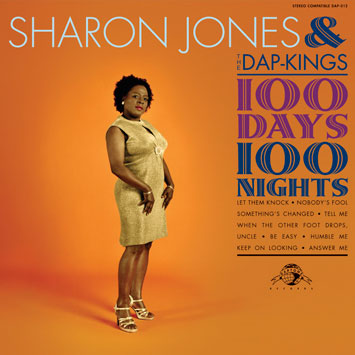
David Karsten Daniels - Sharp Teeth Dean & Britta - Back Numbers The Fiery Furnaces - Widow City The Good, the Bad, & the Queen - The Good, the Bad, & the Queen Sharon Jones & the Dap-Kings - 100 Days, 100 Nights The Pipettes - We Are The Pipettes Radiohead - In Rainbows Mark Ronson - Version The Weakerthans - Reunion Tour Wilco - Sky Blue Sky
Honorable Mention: Glen Hansard & Marketa Irglova - Once: Music from the Motion Picture Various Artists - I'm Not There: Original Soundtrack
I absolutely adore this album. I'm willing to look past Feist as a performer and a person, and the Starbucks affiliation, as well as the iPod ads, and focus solely on this collection because, in my opinion, it's an A+ record.
I've been a fan of Feist after I got a bootleg copy of Let It Die in 2004. It was her second album, and despite her work with Broken Social Scene, it was the one that gained her some indie credibility. It was a good album, but it was kind of touch-and-go. There were some stand-out tracks, like "Mushaboom" and "Let It Die," but the she had the tendency to slip into a mom-rock /soft-pop feel, which ultimately turned her off. Seeing her live, however, made me realize that she did have potential as an artist, and The Reminder solidifies that.
On a personal level, this album hit me hard. For reasons both good and bad, I'll always associate this album with what I was going through when it was first released at the end of April, when I was still dealing with a tough break-up, depressed and angry about everything. Not to mention my fruitless job search was underway, and my father had recently started cancer treatments. It was a rough couple of months, and this album guided me through it with songs like "Past in Present," "The Limit to Your Love," and "How My Heart Behaves." And there were the up-beat songs, too, like "1234," and "I Feel It All."
This album is pretty perfect, and easily shot to the number one spot in my favorites list early this year. I could care less about Feist at this point, but The Reminder will always hold a place in my heart for reminding me that I got through a shitty, shitty time and came out on top.
I'm rather disappointed that I didn't know more about The National before Boxer was released. I'd certainly heard of them, but for some reason I was never interested in listening to them. Per Adam's suggestion, I gave this one a try, and immediately fell in love with it. It's one of the few albums this year that I've been able to listen to on a loop without getting tired of it. I can't really explain what about it is so appealing to me, but I find myself getting sucked in whenever I press Play.
I discovered Bright Eyes shortly after the release of Lifted or The Story Is in the Soil, Keep Your Ear to the Ground back in 2002. It was my first introduction into indie-rock, and it's still one of my favorite albums. Cassadaga is no Lifted, but it's pretty damn close. It features similar moments of huge orchestrations, guest-spots from other Saddle Creek band members, as well as Maria Taylor, Gillian Welch, David Rawlings, M. Ward, Rachel Yamagata, and Janet Weiss. Like previous Bright Eyes records, Cassadaga focuses on both the internal and the political. "Four Winds" is an especially brilliant protest song, both musically and lyrically; it never gets too preachy, and keeps a level head in regard to its ideology. The rest of the album is brilliant, and one of Bright Eyes' best efforts.
Andrew Bird makes fascinating music that isn't so complicated and ambitious that you can't listen to it. He manages to layer on several instruments, samples, vocals, and whistling without overwhelming his audience. And he's got tremendous talent, which sometimes doesn't come out on his albums as much as it does when you see him live. I didn't really notice how powerful his whistling is until I saw him last year; it simply blew me away to know that it wasn't being augmented electronically. Armchair Apocrypha is ambitious in the sense that it features collaboration with Martin Dosh, who provides some gut-busting drums and a buttload of samples to compliment Bird's songs. It may not be the instant classic that The Mysterious Production of Eggs was, but I think it'll stand up on its own as Bird progresses musically. (And he gets points for having the best cover art of the year.)
White Chalk is an extreme departure for Polly Jean, as she wrote the entire album on piano, which she learned while she wrote her songs. It's not the typical alternative-rock / PJ Harvey album, but it's still just as strong as her previous efforts. It's supposedly inspired by her childhood in Dorset, England, which seems appropriate as Harvey sings in a much higher register than she's used to, giving a very childlike, yet ultimately haunting, feel. In places her falsetto is wavering, yet it's impressive in others. It's a quite beautiful album, and probably ranks as one of my favorites of PJ's.
Video: "White Chalk / Silence" (live on Later... with Jools Holland)
It seems like such a long time since Arcade Fire released Neon Bible, probably because the hype and expectations for it were huge. The sounds on the album are just as huge: it's bold and brash with gorgeous orchestrations. You can tell with this album that frontman Win Butler is heavily influenced by Springsteen (and maybe Eddie and the Cruisers?), which is alright with me. Like Springsteen, Arcade Fire's songs tend to make observations about our culture, ranging from religion, war, and pop music.
Video: "Intervention / (Antichrist Television Blues)" (BBC2 Session)
There's nothing new I can say about The New Pornographers, or Challengers. It took a while to grow on me, possibly because it's pretty similar to their last album, Twin Cinema. After seeing them live, however, I couldn't stop listening to it. They're a perfect pop-group, and this is a pretty damn good pop record (even if "pop" wouldn't be the word most would use to describe them). The group sure can blend together some beautiful harmonies and make some spunky music. And this album seems more of Carl Newman's baby than the others, even if a lot of people think of The New Pornos as "Neko Case's band."
Grinderman could have just been another album by Nick Cave and the Bad Seeds (the band includes most of the Bad Seeds). Had it been released ten years ago, it would have made perfect sense. But as Nick Cave has gotten older, his albums started to get softer. After 1996's Murder Ballads, Cave began writing ballads and love songs, seen primarily in The Boatman's Call (influenced by his breakup with PJ Harvey) and his last album, the two-part Abattoir Blues / The Lyre of Orpheus. Grinderman represents a middle-age crisis sort of record; Cave learned to play guitar, and the result was a jerky, loud collection of garage-rock songs.
Video: "No Pussy Blues" (live on Later... with Jools Holland)
Despite the atrocious album cover, M.I.A.'s Kala is fantastic. It's also as complicated as Maya Arulpragasam is herself. It transcends genres, going from world music to hip-hop to electronica. It's political, bashing the West at the same time it asks for acceptance. The production is huge, at times sampling Bollywood and disco in the backing tracks, juxtaposing gun shots and cash register ca-chings, and featuring guest spots from Afrikan Boy and Timbaland. It's tough, natch, to categorize M.I.A. and her music; her American audience is more indie-rock inclined, probably because, compared to other hip-hop artists, her themes are so political and worldly. Seeing her last month in Chicago was surprising; I'll be the first to admit I don't see many hip-hop shows, and, as I expected, the mostly-white audience seemed to be filled with people who would be just as likely to attend any other indie-rock show. Her following aside, M.I.A. manages to produce post-Colonialist hip-hop, finally making Edward Said's Orientalism relevant to a jaded, superficially political hipster culture.
New Yorker music critic Sasha Frere-Jones wrote in a controversial article that today's indie-rock bands lack good, old-fashioned rhythm, using bands like Grizzly Bear and Arcade Fire as examples. In my opinion, it's kind of a ridiculous article; he's just as bad as any of the bands he criticizes for having a style that lacks what he's looking for. Sure, Grizzly Bear doesn't take a lot of inspiration from Motown or '70s funk, and Arcade Fire sounds more like Springsteen than Sly and the Family Stone. And while that may not be Jones's preference, it's silly to think that all bands should sound like Spoon, a top-notch band that sounds like what Jones is jonesin' for, despite their absence from the article.
Spoon has always sounded a little like a throwback to the soulful bands of the '70s, back when white dudes mixed guitars with a horn section. And on Ga Ga Ga Ga Ga, one of the band's strongest albums to date, they seem to play on that idea with their song titles, particularly the album-closing "Black Like Me." The white guys from Austin, Texas have had a soulful sound for their last few albums, and while this new one isn't much of a departure from that niche, they're certainly not in any hurry to fix something that isn't broken.
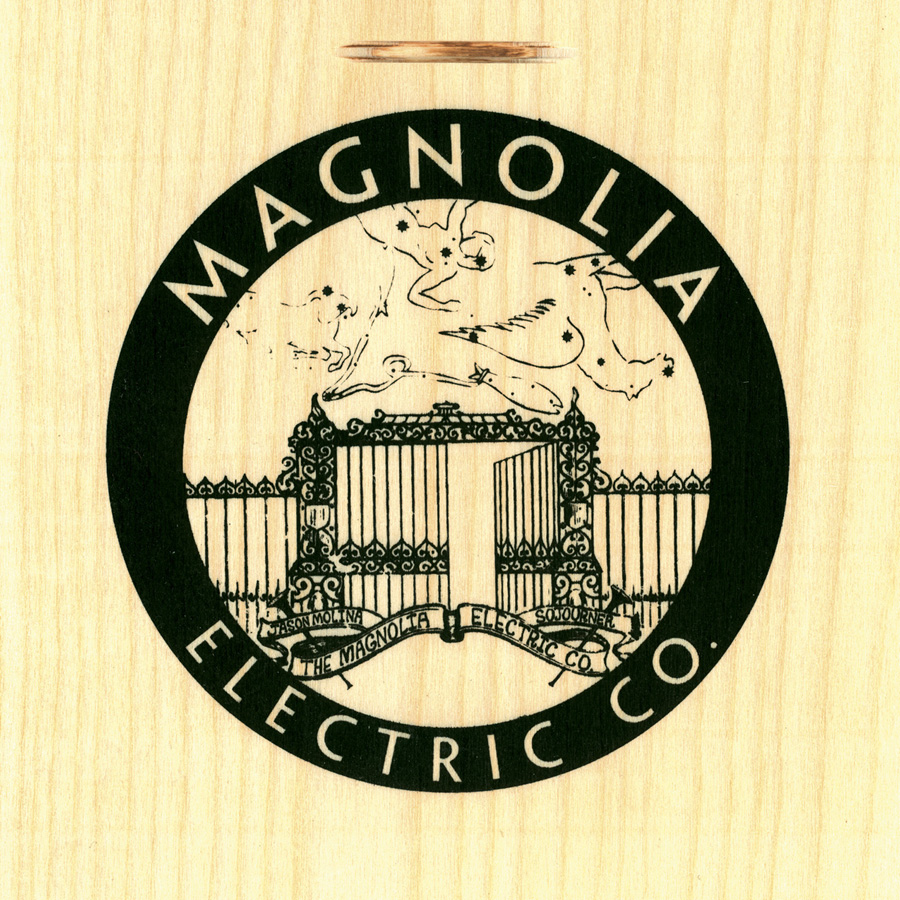
Magnolia Electric Co.'s box set is, without a doubt, my favorite release of the year. Comprised of three LPs (Nashville Moon, Black Ram, and Shohola), one EP (Sun Session), and a DVD (The Road Becomes What You Leave), Sojourner features music from four recording sessions from which Jason Molina compiled his last album, Fading Trails. My biggest complaint with that album was that it seemed more of a compilation than a true album, and the release of this box set is magnificent. You can clearly see the vision Molina had for the three separate LPs, which were recorded and mixed by different producers at different locations. It's an A++ collection.